
How to Find a Ritchie County Owner
The path runs from location to name to document. Got an address? The assessor's Parcel Address field is the fastest entry point for a Ritchie County property search. Got a name instead? Type it LAST NAME FIRST NAME, no commas. Broad results are common in a county with repeated surnames. Narrow them by comparing situs, district, account, map/parcel, and legal description until one parcel clearly matches.
- Start with an address or the owner name and locate the assessor record.
- Copy the owner field, mailing and situs addresses, account, district, map/parcel, and deed book/page.
- Search the clerk's Deeds index for the owner as grantee and inspect the newest relevant conveyance.
- Compare the instrument's grantor, date, legal description, and any correction or estate filing.
- Check the tax ticket or map only when the question concerns billing or parcel location.
What this method answers is narrow but useful. It shows which name the tax roll carries. It also shows which transfer sits in the recorded deed chain. It cannot confirm that every interest in the land has been conveyed. A trustee, life tenant, company, or estate may hold a separate slice of the ownership.
Where Ritchie County Ownership Appears
Ownership shows up in several record sets, and each serves a different purpose. The Ritchie County assessor keeps the name used for taxation. The County Clerk indexes deeds and other recorded instruments. GIS links a parcel shape to its assessment data. The sheriff's office holds the tax tickets. No single set amounts to a full title report.
| Record Source | What It Provides | How to Read Its Date |
|---|---|---|
| Assessor roll | Owner field, parcel keys, legal text, values, exemptions | Annual assessment information; may lag a deed |
| Clerk deed index | Indexed parties, document type, book/page, instrument | Recording and instrument dates need comparison |
| Probate or fiduciary file | Will, appointment, estate, or heirship context | May explain a transfer before a deed is indexed |
| GIS viewer | Tax polygon and location attributes | Annual map and assessment refresh |
| Sheriff tax inquiry | Ticket, billed, paid, due, and parcel references | Tax year, not deed or title date |
The search form lives on the Ritchie County Assessor portal. It accepts owner, address, account, district, map/parcel, legal-description, and deed book/page lookups for a Ritchie County property search.
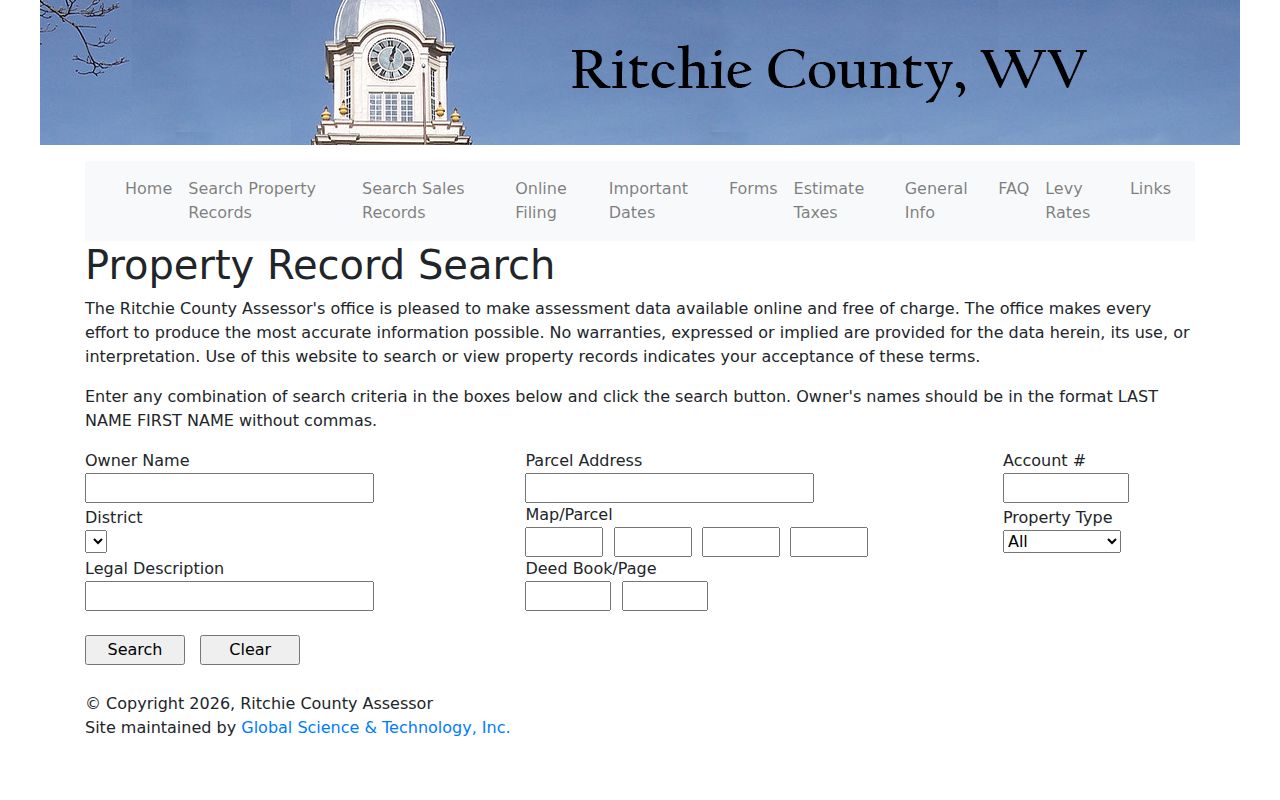
Those fields only take you to an assessment entry. To understand the terms and the property description, you still need the underlying deed.
Reading a Ritchie County Owner Field
An assessor record can show more than a name. The parcel entry may list a mailing address, situs address, account, district, map/parcel, legal description, and deed book/page together. Exact labels on the parcel card should be checked live on the portal. One caution: a mailing address does not prove where the owner lives. Nor does one name field list every interest holder. Treat it as the tax-roll name, nothing more.
- Owner of record
- The name carried by a public assessment or recorded instrument, depending on the field.
- Grantee
- The person or entity named as recipient in a deed.
- Situs address
- The physical location associated with the parcel.
- Mailing address
- The place where a tax notice or letter is sent.
- Title
- The legal interest and chain that require review of recorded documents, not just a search result.
The owner of record may be an LLC. It could also be a trustee, fiduciary, or estate. The state business entity search helps decode a company name. But entity status alone never proves the business owns the parcel. Tie the entity to a deed and legal description before drawing conclusions.
Confirming the Ritchie County Deed
The Ritchie County Clerk's Document Inquiry indexes records by party and instrument. Run the assessor name as grantee under the Deeds category. Note the instrument type, date, book/page, grantor, and legal description. If a trustee or company shows up, repeat the search under that exact indexed spelling. An affidavit of heirship, correction, or quitclaim is not a simple sale. Inspect the referenced document first.
When the title story gets tangled, look for later releases, assignments, correction deeds, and probate entries. A parcel card may cite an older deed. It may also show a name that has not refreshed since a recent closing. The clerk's online index does not state its earliest year. An older gap may call for the physical book, a mail request, or a historical collection.
For ownership questions hinging on a current transfer, weigh the newest recorded deed against the annual assessor roll. The current owner record path covers that timing and verification in detail.
Ritchie County Trusts and Company Owners
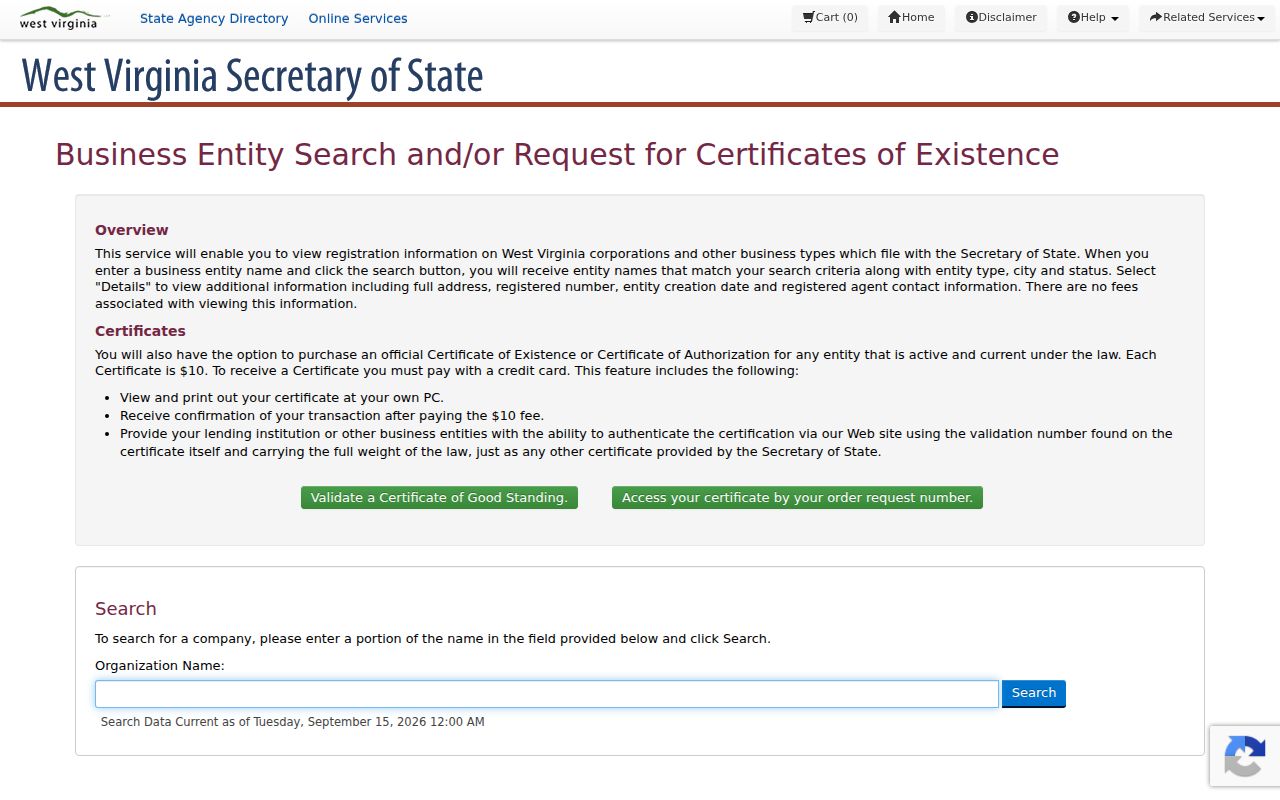
Land in Ritchie County is often held in a business or fiduciary name. That name is not always an individual's. The WV Secretary of State Business Entity Search takes even a partial organization name. Results list entity name, type, city, and status. Detail pages add an address, registration number, creation date, and registered-agent contact. Viewing is free; an official certificate costs $10. None of that links the business to land. A County Clerk deed names the entity and the parcel. The state business entity search page shows the organization-name lookup and those result details.
Trusts can appear under a trustee's name or the trust's own name. A fiduciary may be acting for an estate. Mineral companies sometimes hold a lease. They may hold a mineral interest without owning the surface home at all. The explanation usually sits in the deed, affidavit, probate, and assignment records. A filing can involve extracted minerals, timber, fixtures, or collateral. The Secretary of State's UCC search and retrieval system can surface a debtor or secured-party lead. Filers are cautioned not to place sensitive personal or payment data in filings. A UCC result never replaces a real-estate deed or establishes surface ownership.
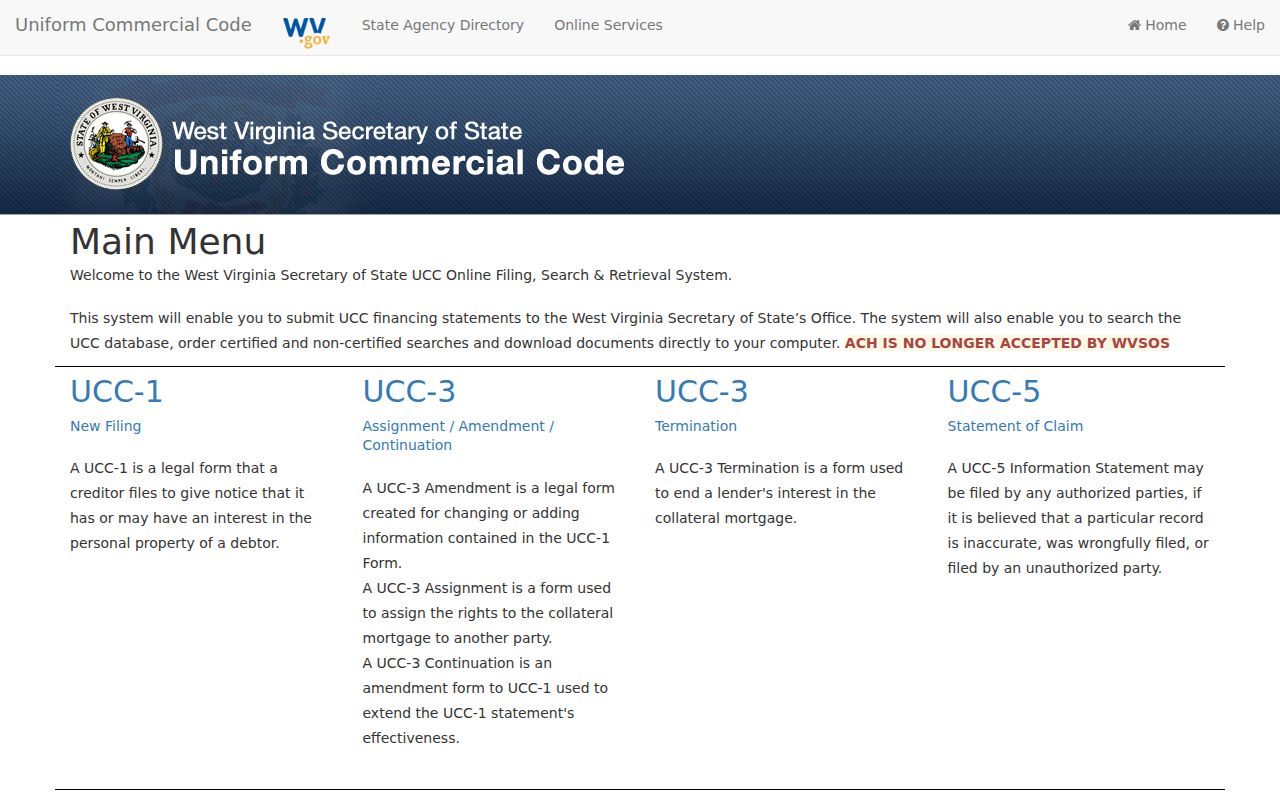
When the filing concerns land itself, rely on the County Clerk's recorded deeds, mortgages, and liens. UCC results are not a title record for a Ritchie County parcel.
Timing a Ritchie County Ownership Lookup
No published schedule shows when a Ritchie County closing turns into an updated owner field. Statewide tools lag too. The state Property Assessment Viewer refreshes annually, and it warns that simple ownership changes may not filter through promptly. Parcel splits can wait as well. A transfer from July 1 to June 30 has until February 1 of the next calendar year for map changes, under state guidance. The two offices rarely agree at first. Keep both dates when the clerk holds a newer recorded deed than the assessor card shows. Never erase a roll name on a hunch. A fresh screen is not a corrected record. Ask the assessor about an update, and ask the clerk whether the instrument is indexed and whether related corrections or releases sit in the deed records.
When Ritchie County Probate Explains a Name
A death transfer in Ritchie County can travel several routes. A will moves the parcel by one door. A fiduciary appointment, a small-estate record, an affidavit of heirship, an executor deed, or a later conveyance each use a different one. The County Clerk IDX tracks the trail. It offers categories for WILL, fiduciary, SMALL ESTATE, Vitals, and AFF/HEIR. The local affidavit instructions cite the Deed Book Code AH search location. Keep probate and land filings together. Each filing answers one piece of the story. Historical indexes add spelling and date clues. Ritchie County index runs cover deaths from 1889 to 1964. Marriages run from 1843 to 1970. Public access opens at 50 years for death, marriage, and divorce records. Births wait 100 years. Eligibility and statute still control recent certificates. For a record request, the County Clerk sits as the property-record custodian. A vital index lead alone never proves an heir's interest. The deed does that.
Limits of a Ritchie County Owner Search
A Ritchie County owner search has firm limits. It can surface a name on the tax roll or in an index. But a complete title chain, every co-owner, a mineral estate, or a pending estate transfer may stay hidden. A parcel can cross postal or municipal labels. The owner of record may simply get mail somewhere else. Always confirm names against the legal description and the recording date on the instrument. The state voter lookup is not an owner database. No one should use it to infer a property interest. Its name and precinct context can help explain an identity question. Same-name results and protected-address participants still demand care.
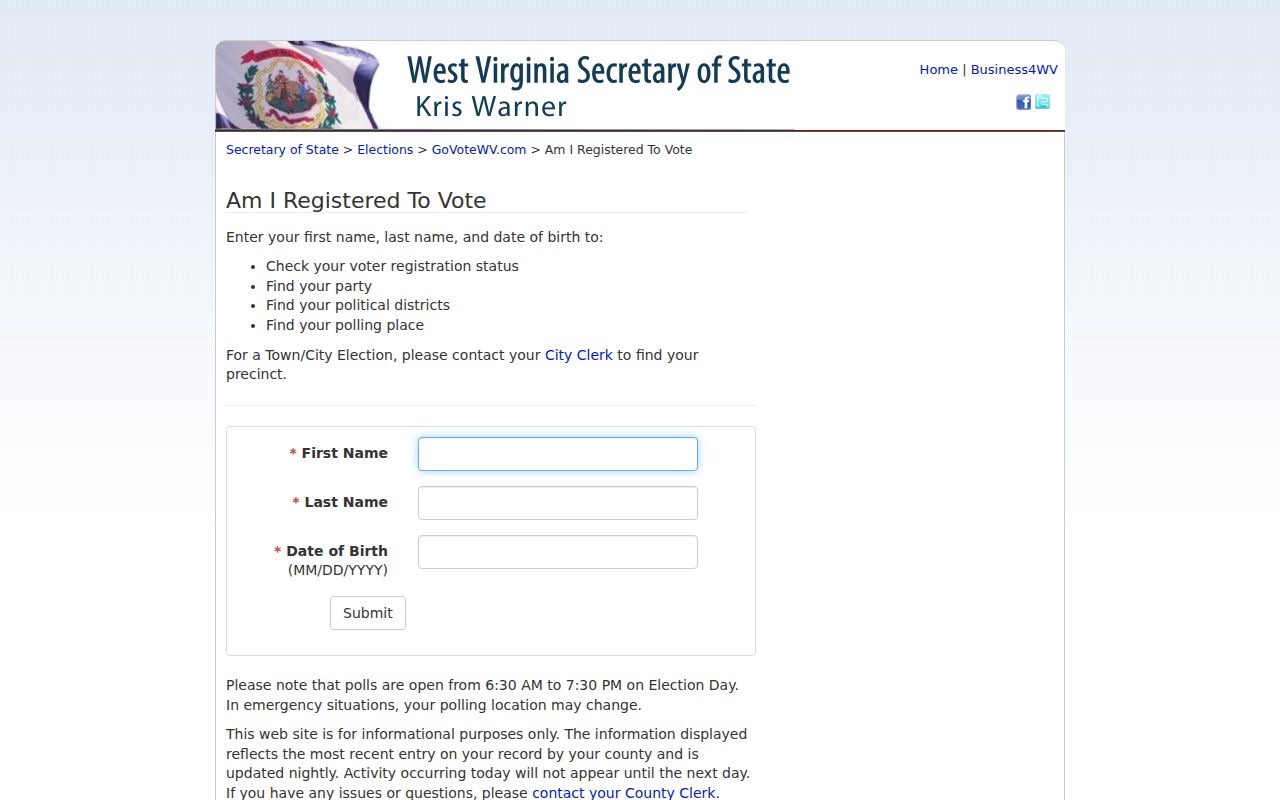
Keep that distinction explicit in your notes. Confirm any property interest with the deed, the legal description, and the relevant estate or entity record.
Owner field is not title proof. An assessor entry is a tax record, not a title opinion. An LLC, trust, or estate may hold an interest, and a new deed can be newer than the annual roll. Ask the custodian or title professional when ownership must be established.
Public ownership data in Ritchie County serves real purposes. Property diligence, tax review, and local history all fit. Never use an owner's name or address to stalk, threaten, or harass anyone. When the record trail turns unresolved, report the conflict instead of picking a person by assumption.