
The Ritchie County Owner-of-Record Card
The Ritchie County Assessor Property Record Search is the quickest way to see who sits on the assessment roll. The public form accepts several entry points. Search by owner, address, account, or district. Map/parcel, property type, legal description, and deed book/page also work. Parcel cards vary in what they show. Treat the fields as a checklist for reading the live card, since not every card displays every item.
| Owner name | Name currently carried by the assessment record. |
|---|---|
| Mailing address | Address used for tax notices; it may differ from the land. |
| Situs and parcel | Physical address, account, district, and map/parcel key. |
| Legal description | Recorded land text for matching the parcel. |
| Deed book/page | Reference to a clerk instrument that can confirm a conveyance. |
| Value and exemption | Assessment data tied to a tax year, not a market appraisal. |
The Ritchie County assessor search page presents its search fields. Enter names as LAST NAME FIRST NAME. No commas. If a name returns several parcels, compare the situs, district, map/parcel, and legal description before picking the right record.
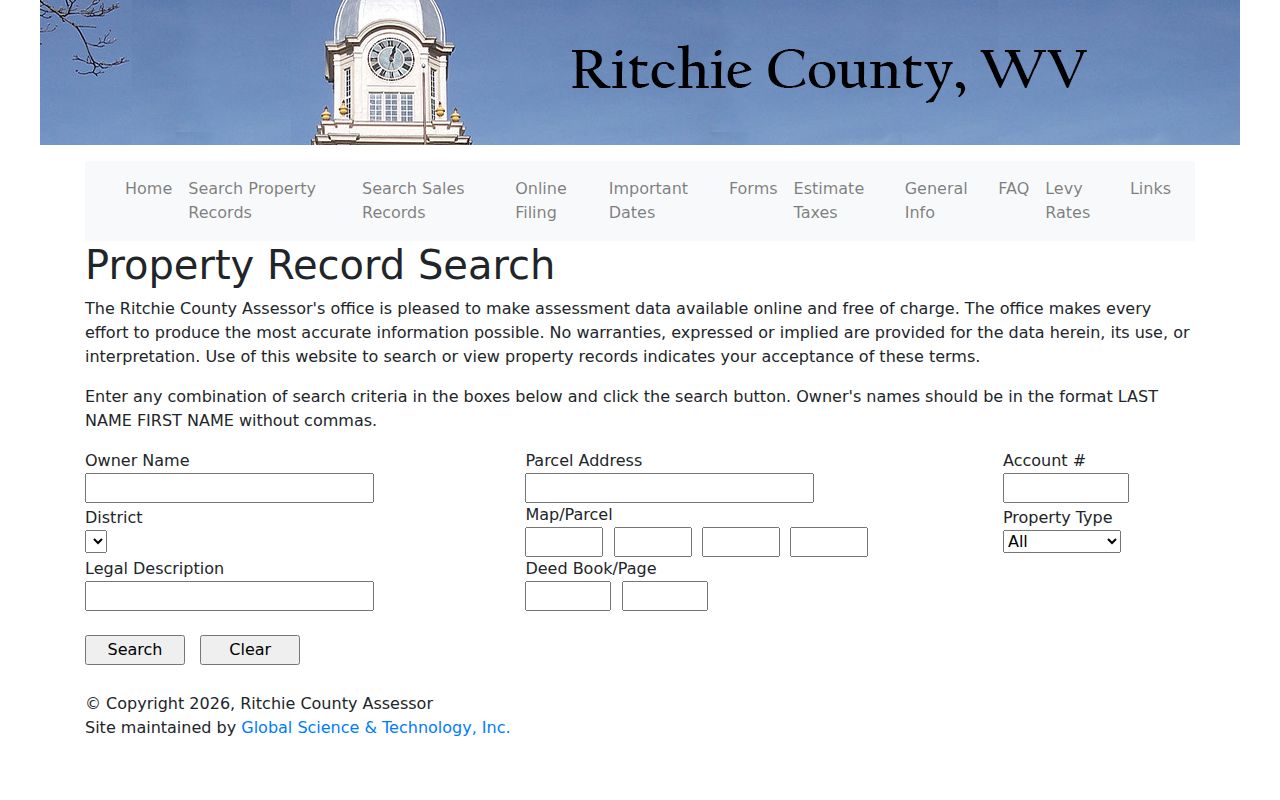
The returned owner field only starts the inquiry. A deed, correction, or fiduciary filing can carry terms that a short assessment record never shows.
What the Ritchie County Owner Record Means
An owner of record is the name a particular public record carries. It says nothing about who lives there. Each source answers a different question. The assessment roll exists for taxation. The County Clerk's deed index covers recorded instruments, and the sheriff ticket covers billed property tax. Name the source whenever you report a name or date, especially after a recent closing.
- Assessment roll
- County assessment data organized by parcel, account, and tax year.
- Owner of record
- The owner name shown by the assessor or a named grantee in a deed.
- Situs address
- The address associated with the land itself.
- Mailing address
- The address where a notice is sent, which may be a different location.
- Recording lag
- The period before a recorded transfer appears in an updated assessment layer.
A trust, LLC, estate, or trustee may stand in for an individual. Copy the entity's exact spelling from the record. Then search that spelling in the clerk's deed index. A state business profile can explain a company name, but it cannot prove that company owns the specific tract.
How Current Is a Ritchie County Owner Entry?
Ritchie County publishes no fixed delay between a closing and a changed assessor owner field. West Virginia Property Assessment says the statewide viewer takes annual updates. A simple ownership change may lag behind. A parcel split can wait on county map revisions. State guidance says transfers between July 1 and June 30 should have map revisions submitted by February 1 of the next calendar year, and the same guidance advises contacting the assessor if a line is still stale after two years.
This sets no Ritchie closing-to-roll schedule. Note both dates when the clerk index shows a new deed but the assessor card still lists the seller. The deed is the newest recorded conveyance. The assessor stays the tax roll until it updates. Ask the assessor what proof or correction request changes the entry.
The state viewer is the portal for the annual assessment and parcel view. Use it alongside the clerk's deed index.
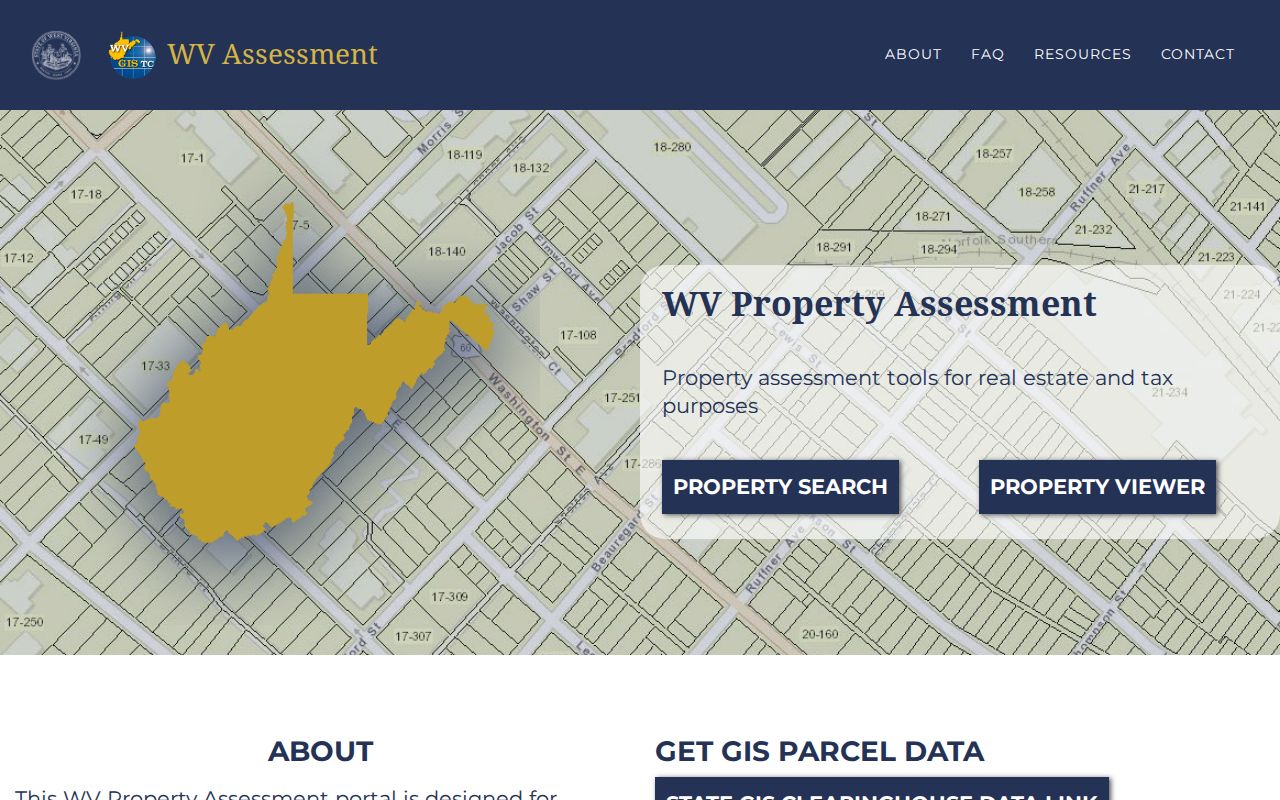
Never assume the two systems update together. Compare the deed recording date, the assessor year, and the map refresh before settling on an answer.
Confirming the Current Ritchie County Owner
The clerk index confirms whether the assessor name matches a recorded transfer. Search the owner as grantee in the Deeds index. Then read the document itself. Check the grantor, grantee, instrument date, recording date, book/page, and legal description, and hunt for a later correction deed or fiduciary entry if anything differs.
- Open the assessor result and copy the owner, account, map/parcel, legal description, and deed book/page.
- Search the County Clerk Document Inquiry for the owner as grantee.
- Compare the deed's legal description and date with the assessed parcel.
- Check for correction, quitclaim, life-estate, trust, or estate documents that alter the context.
- If no clear match appears, ask the clerk whether the index covers that year and ask the assessor about a pending update.
The assessor's deed book/page is a pointer, not proof that nothing later exists. For the full chain of title, follow the Ritchie County deed record process. The newest recorded deed shows what was filed. A title professional decides whether that chain supports a transaction.
Ritchie County Mailing and Situs Checks
Check both address fields before tying a person to a parcel. The situs address locates the land. The mailing address steers the bill. It may point to another town, a rural route, a fiduciary, or a business. A Pennsboro mailing city or an Ellenboro ZIP alone never proves the property sits inside municipal limits.
Pair the assessor's District and Map/Parcel with the GIS viewer to find the tax polygon. USPS verifies a delivery format. It cannot settle legal ownership or a town boundary. If an old address fails, try the owner name or a legal-description fragment, and ask the assessor how the road name is stored.
Note the parcel key, owner spelling, and both addresses. Add the tax year and source date. Keeping them separate stops a billing contact from being mistaken for the land's current owner.
Company and Estate Owners in Ritchie County
The owner of record is not always a person. Ritchie County deeds often name a company, a trust, or an estate representative instead. When that happens, start with the WV Secretary of State business search. It returns entity type, city, and status. Its detail page adds an address, registration number, creation date, and registered agent. That tells you what the entity is. The recorded deed still has to confirm its connection to the parcel in Ritchie County property records. Viewing is free, and a certificate of existence or authorization costs $10.
Estates take a different path. Search the County Clerk fiduciary and will indexes. Also check small-estate categories, AFF/HEIR, and any executor or administrator deed. A historical death or marriage index can help normalize a name. But probate and land documents establish the transfer on the deed records themselves. Recent vital records carry access limits under state law.
Mineral companies and trustees may hold only a partial interest. An assessor surface owner field is not a full accounting of mineral rights, leases, easements, or life estates. Read the legal description and any reservations in the document itself.
Limits of a Current Owner Lookup
Every owner lookup has edges. An assessor field shows the name carried on the annual tax roll, nothing more. It does not prove residence. It may not show every owner of a split interest. And it cannot establish that no new deed is pending in Ritchie County. A tax ticket proves tax billing, not ownership. A map polygon on the GIS viewer gives location context, not a legal line.
Use dates and sources together. When the assessor and clerk differ, show the roll date and deed date side by side. Ask the offices about correction or indexing status and leave an ownership question unresolved if the public record trail does not settle it.
For due diligence, estate work, or a purchase, confirm the instrument with the County Clerk and consult the right title professional. Use public owner of record information for lawful property research. Never use it to stalk or harass anyone.