
What a Ritchie County Property Value Means
Three figures tend to get blended in a Ritchie County property value search. Assessed value is the number the property-tax process actually uses. Market or true-and-actual value is a broader concept. It means the price a property would bring in an ordinary voluntary sale. A recorded sale price is different again. It is the consideration reported for one specific deed. That transaction may cover only part of the land or carry unusual terms.
| Value Type | Meaning | Where It Appears |
|---|---|---|
| Assessed value | Tax assessment value, generally 60 percent of true and actual value | Assessor property record and tax estimator |
| Market value | Estimated ordinary-sale value, not necessarily a displayed field | Assessment method or licensed appraisal |
| Recorded sale price | Consideration tied to one recorded transfer | Assessor Sales Search and deed/declaration |
Ritchie County parcel results can display appraised, assessed, land, improvement, total, exemption, and tax fields. The exact field lineup varies. Read each label and check the tax year. The word "value" alone tells you nothing about whether a number reflects market evidence, a taxable assessment, or a transaction price.
West Virginia's Ritchie County Assessment Level
West Virginia Code §11-3-1 sets the annual assessment date as July 1. The same statute fixes the assessment ratio at 60 percent of true and actual value. Under that standard, true and actual value means the price a parcel would bring in a voluntary sale under ordinary conditions. It is not a forced sale price. The WV Tax Division explanation gives a simple illustration: a property worth $100,000 on the open market carries a $60,000 assessed value. W.Va. Code §11-1A-3 provides the formula behind that figure.
This ratio explains a common point of confusion. A tax roll in Ritchie County often shows a lower assessed number. A recent sale price or appraisal would suggest a higher figure. That gap is built into the system rather than a sign of error. The assessor handles ordinary real-estate values. Certain industrial or natural-resource property is valued centrally by the Tax Commissioner, and public-service business property follows its own valuation track.
The full text of the state assessment statute is available online.
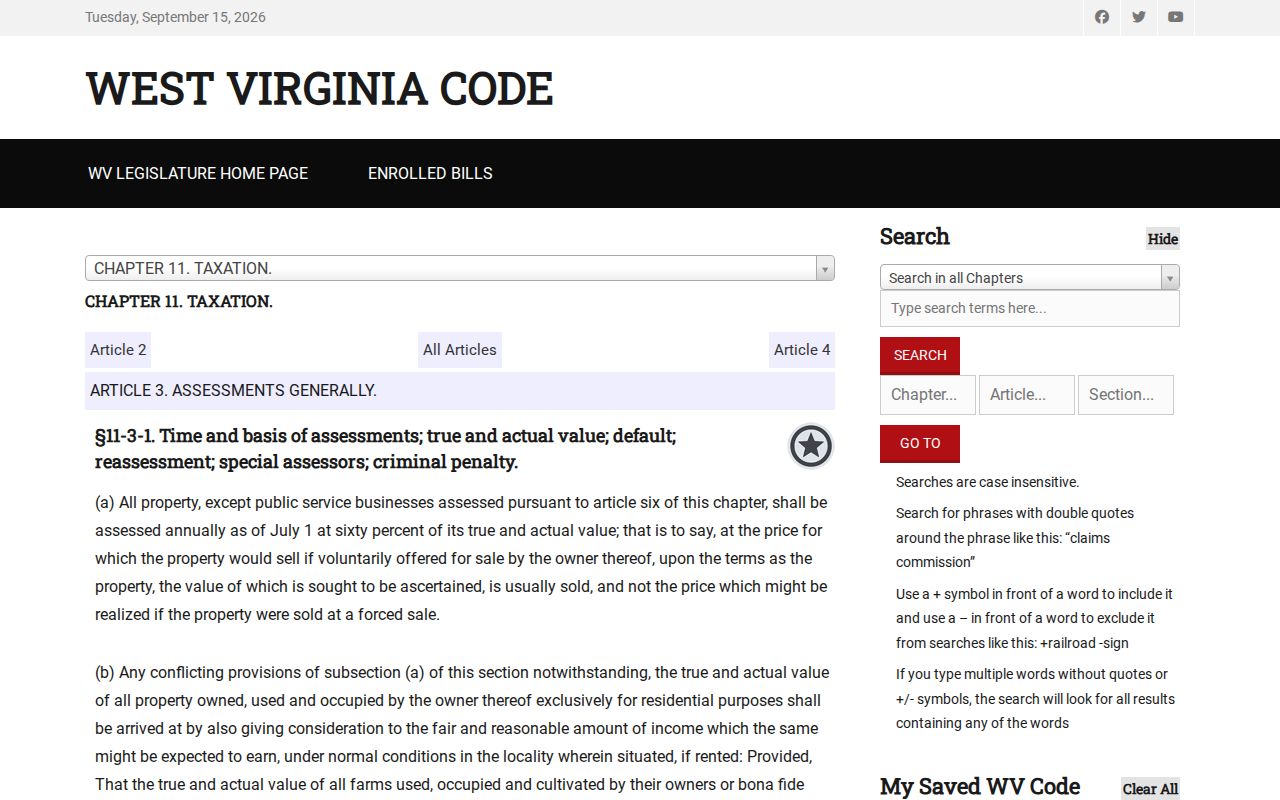
Treat the percentage as a general assessment rule, not a shortcut appraisal of one tract.
Where Ritchie County Property Values Are Recorded
The Ritchie County Assessor search accepts owner, address, account, and district. It also takes map/parcel, property type, legal description, and deed book/page. A separate Tax Estimator asks for assessed value, tax year, district, and class. An assessor figure belongs to the annual assessment record alone. The sheriff's tax ticket is a different animal. It shows billed, paid, and due amounts. Confusing it with assessed value is a common mistake.
The Ritchie County Tax Estimator screenshot shows its value, year, district, and class inputs.
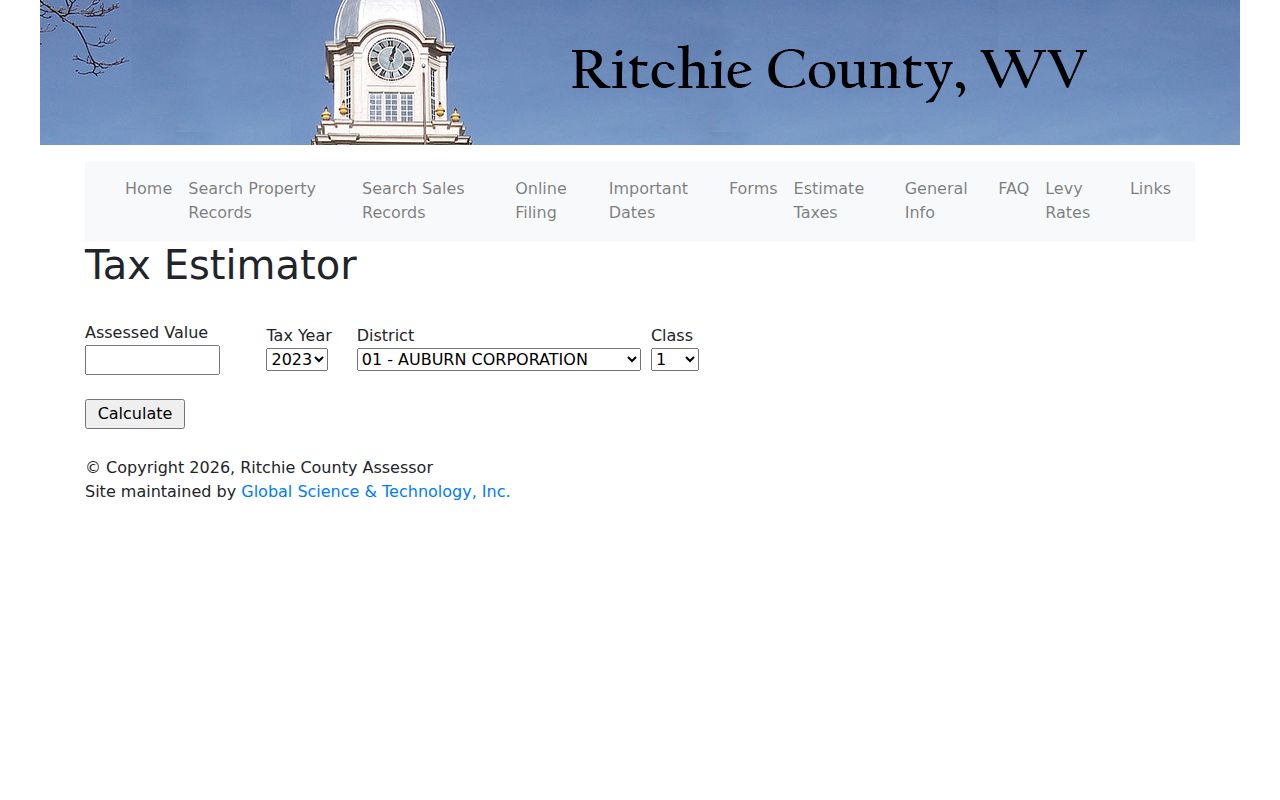
The assessor sets value; levying bodies set the rates. If a result does not explain how a field is used, ask the assessor before comparing it with a bill.
Ritchie County Assessor Sales Search Filters
The assessor's Sales Search helps locate Ritchie County transactions. You can filter by date, price, property size, acreage, type, and sale qualification. Filters can narrow the set of deed records you pull. The portal is not a complete listing service or appraisal history, though. Property Type, Sale Qualification, and Sale Type options are defined by the county. So check the live choices on the site.
| Search Field | Input Type | What It Narrows |
|---|---|---|
| Start Date / End Date | Date range | Transaction period |
| Minimum / Maximum Sale Price | Numeric bounds | Reported price range |
| Minimum / Maximum Square Footage | Numeric bounds | Structure size range |
| Minimum / Maximum Acreage | Numeric bounds | Land area range |
| Property Type | Select menu | County-defined property category |
| Sale Qualification / Sale Type | Select menus | Transfer context or qualification |
The assessor Sales Search screenshot shows its date, price, acreage, square-footage, type, qualification, and sale-type controls.
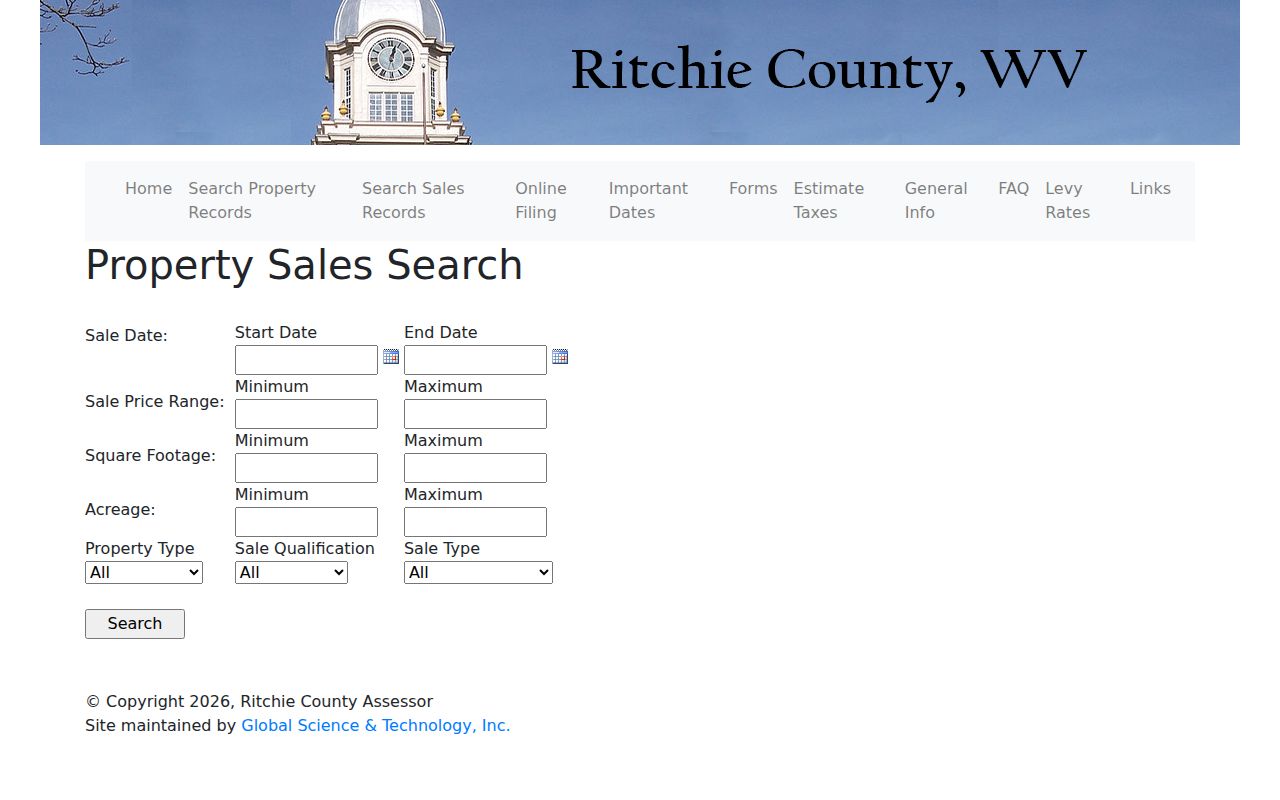
When a likely comparable turns up, confirm the price in the recorded deed and declaration. Keep the map/parcel and legal description handy. A sale can include acreage, minerals, or a partial interest.
Why a Ritchie County Sale Is Not a Value
A recorded price is evidence of one transfer on one date. It might be a family conveyance, a partial interest, a mineral estate, timber, a distressed transaction, unusual consideration, or some other non-typical sale. The assessor's Sale Qualification field helps separate those records when it is populated. A sale result never automatically equals the market value of the full parcel today.
Compare the sale date, sale type, acreage, square footage, property type, legal description, and deed book/page. If the deed covers more than a home and its ordinary lot, it may be a poor comparison for another property. Ritchie County's oil, gas, timber, and farm history makes the legal description especially important. Read it closely.
Note: for a financing, estate, or purchase decision that calls for market value, use a licensed appraisal or another qualified valuation method. A county tax result serves a different purpose.
Annual Ritchie County Value Changes
The assessment date is July 1. The assessor's county information says annual assessment work should finish by January 30. The books go to the Board of Equalization and Review by February 1. That cycle explains why a public value may not move the day a deed records or a home changes hands. A new transfer often appears first in the clerk's index.
Statewide assessment data refresh annually in the WV Property Assessment viewer. A simple ownership change may not filter through immediately. New parcel lines wait on county submissions. Ritchie County does not publish its exact closing-to-assessment lag. When a value record looks stale, ask the assessor how to correct it. Note which tax year you are reviewing.
Ritchie County Value Versus the Tax Bill
Two county tools answer different questions. A tax estimator works from assessed value, tax year, district, and class. It produces a rough figure. The sheriff's tax inquiry does something else. It pulls a ticket by number. It shows what was billed, what was paid, and what remains due. One is a calculation aid. The other is the bill of record.
Exemptions can change the taxable amount. Yet a value field on its own reveals nothing about the full tax account. Never treat an estimate as a certificate or guess a balance from an assessed figure. Questions about tax tickets, exemptions, or appeals follow the office path on the Ritchie County property tax record page. Knowing a value starts with knowing where the number came from.
What Ritchie County Property Value Cannot Tell You
An assessed value exists for one purpose. It sets the base for taxation. It is not the price a parcel would fetch on the market. It is not a current appraisal, a lender's valuation, a title opinion, or a boundary survey. Even a recorded sale price can mislead. The deed may cover only part of a surface parcel. Or it may bundle in mineral and timber interests. A GIS outline, likewise, is no substitute for an appraisal.
Assessment is not a sale estimate. West Virginia's general 60 percent assessment rule helps explain the tax roll. It does not provide a current market price for an individual Ritchie County property.
Treat each piece as separate evidence: assessor fields, sales filters, the recorded deed, and the current tax year. When a value matters to a transaction or a dispute, call the assessor or a qualified appraiser and ask the question plainly.